2026 Events
Public talks · Workshops · Programs · Camps · Advancing evidence-informed Tai Chi and Qigong

Upcoming
CLINICAL TRIAL
Virtual Tai Chi and Qigong for Chronic Low Back Pain (Spine 2027). A randomized controlled trial.
The Center for Taiji and Qigong Studies provides the program and instruction for a randomized controlled trial extending the work published in the North American Spine Society Journal in 2024. The study will enroll 600 adults with chronic low back pain and will examine clinical effectiveness alongside healthcare use and work productivity.
Enrollment: Through referring physicians and participating employers
Enrollment closes: January 2027
First classes: February 1, 2027
Format: Live online, delivered alongside usual care
Sponsor: New York Medical College
Principal Investigator: Kenneth A. Knapp, PhD
Collaborators: Weill Cornell Medicine, Columbia University, Yale University
Program and instruction: Center for Taiji and Qigong Studies
Registration: ClinicalTrials.gov NCT07772154
IRB: New York Medical College, Protocol 30515
October 1, 2026
Conference Presentation
New York & New Jersey Pain Medicine Congress
Tai Chi and Qigong for Chronic Low Back Pain: Randomized Trial Results and a Brief Practice
Neel Mehta, MD, and Master Yang Yang, PhD, present findings from the randomized controlled trial published in the North American Spine Society Journal, followed by a brief guided practice with the audience.
Date: Saturday, November 7, 2026
Format: In-person, Session 7B, Longevity and Wellness
Location: Hyatt Regency Jersey City, Jersey City, NJ
Audience: Pain medicine clinicians. Registration through the Congress.
Learn More
November 7, 2026
November 20 to 22, 2026
Workshop
Kripalu Center for Yoga & Health
Tai Chi and Qigong for Back Pain
Improve Sleep, Reduce Stress, and Restore Balance
An in-person workshop at Kripalu Center for Yoga & Health exploring Tai Chi and Qigong as gentle, intentional practices for relieving chronic back pain while enhancing sleep, stress regulation, balance, and confidence in everyday movement. Participants will engage in slow, intentional movement, stillness, and meditation practices to strengthen the core, support spinal stability, and examine and transform the roots of stress and anxiety.
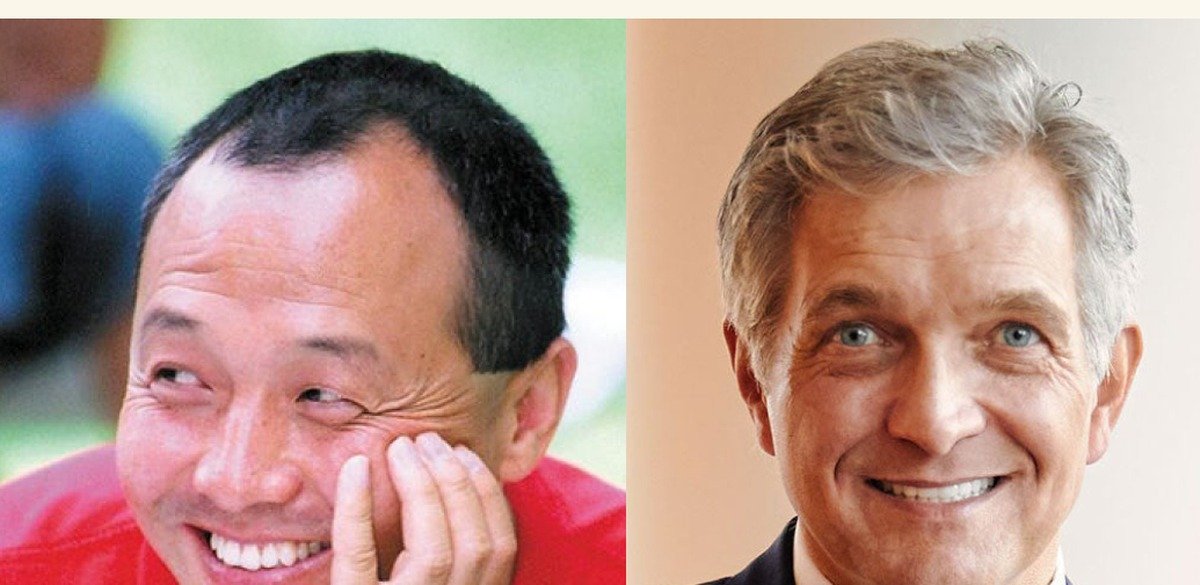
The workshop reflects evidence-informed principles studied in a randomized controlled trial of Tai Chi and Qigong for chronic low back pain and includes clinical perspectives from honored guest speaker Roger Härtl, MD. Recent clinical research on a virtually delivered Tai Chi and Qigong program for chronic low back pain, published in the North American Spine Society Journal, will also be discussed.
Dates: Friday to Sunday, November 20 to 22, 2026
Format: In-person workshop
Location: Kripalu Center for Yoga & Health, Stockbridge, MA
Registration: Through Kripalu Yoga & Health
Learn More
Photo: Courtesy of Kripalu
Past
Department Teaching · Mount Sinai Geriatrics
Tai Chi and Qigong for Whole-Person Health in Aging: Back Pain, Balance, Sleep, and Cognitive Health
An invited presentation to the Department of Geriatrics and Palliative Medicine at the Icahn School of Medicine at Mount Sinai, introducing Tai Chi and Qigong as a simple yet profound, evidence-based, whole-person practice. Drawing on 40 years of teaching, including more than 25 years of clinical work in the U.S., and randomized controlled trials examining back pain, balance, immune function, sleep, and cognition, the session outlines what the practice looks like and who benefits most.
Audience: Mount Sinai faculty, staff, and trainees (not open to the public)
Format: Virtual (Zoom)
Host: Department of Geriatrics and Palliative Medicine, Icahn School of Medicine at Mount Sinai
July 16, 2026
April 30 to May 1, 2026
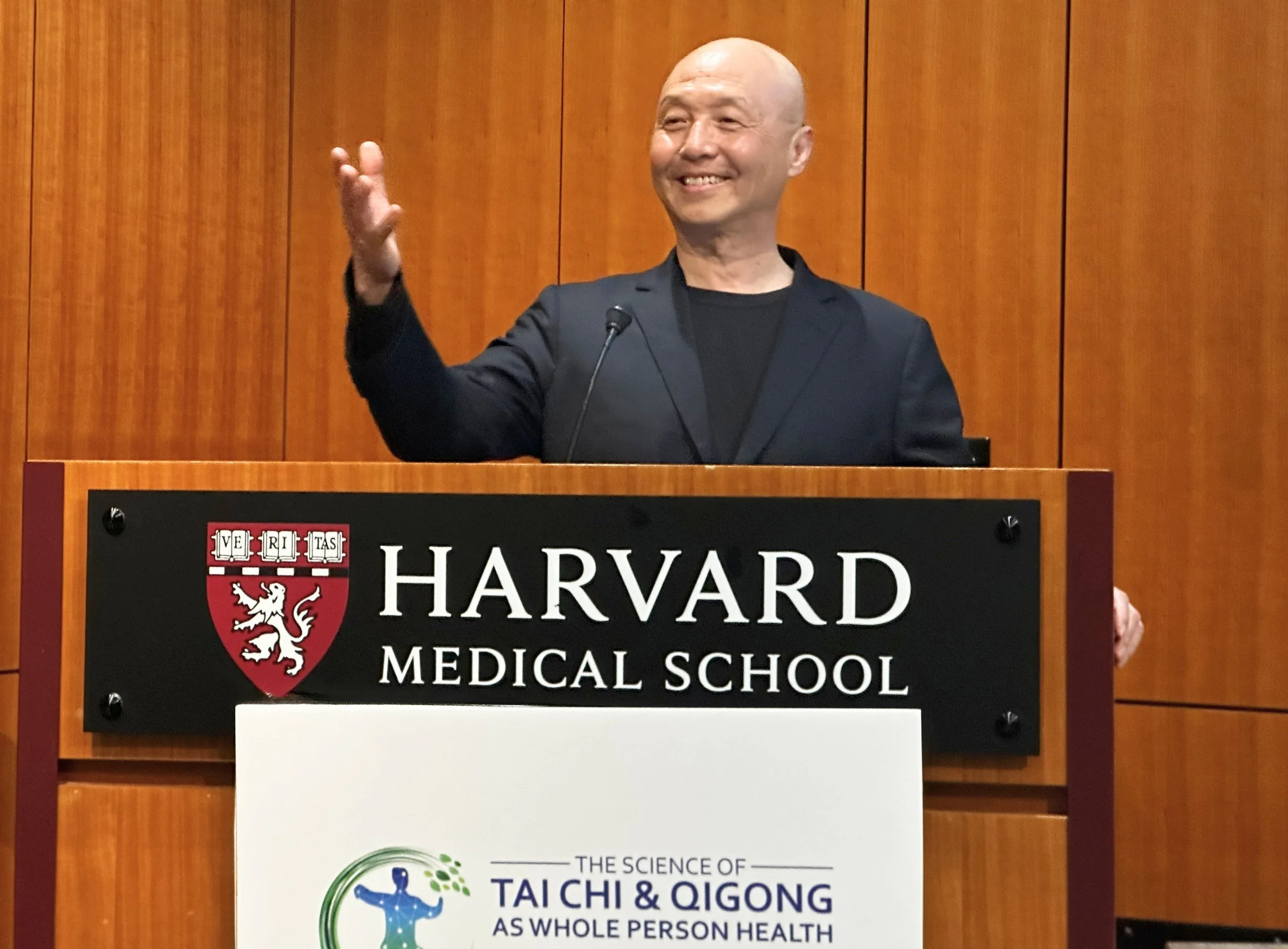
Oral presentation: advancing evidence-based Tai Chi and Qigong for back pain and whole-person health
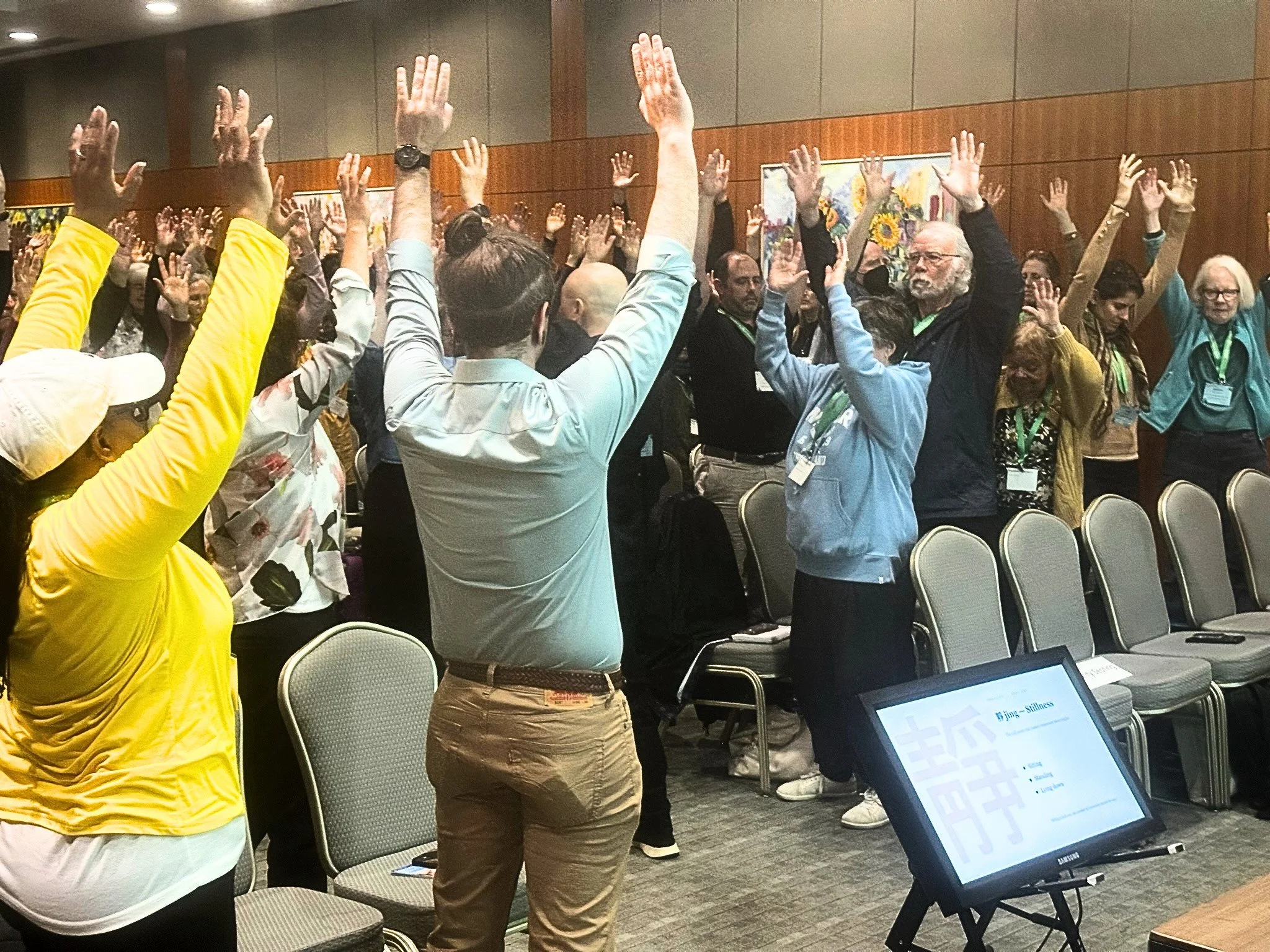
Interactive session: participants experiencing stillness and movement in practice
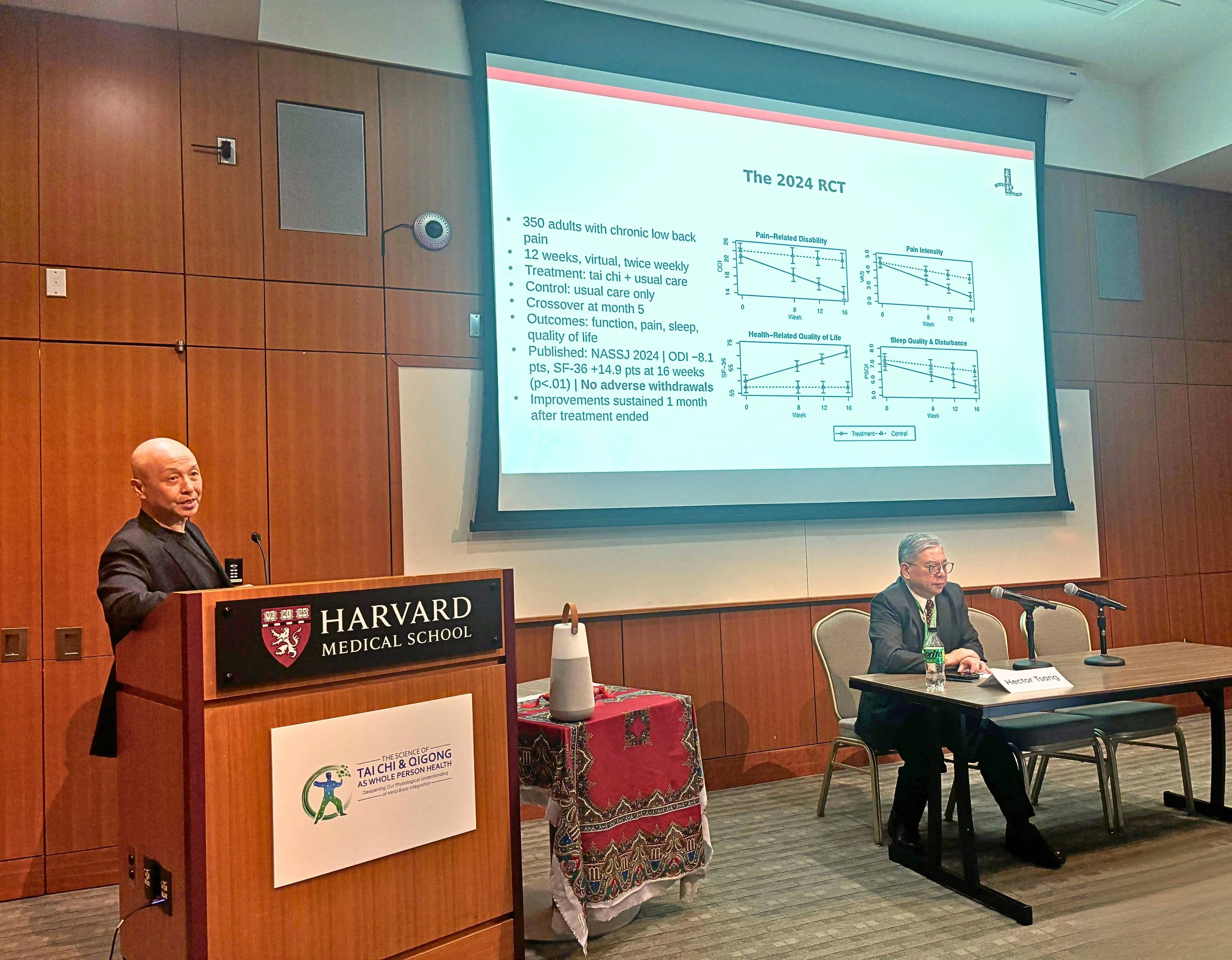
Oral presentation: sharing results from a 350-participant randomized controlled trial
Conference Presentation at Harvard
Advancing Evidence-Based Tai Chi for Back Pain and Whole-Person Health
Dr. Yang Yang presented both scientific findings and experiential training at Harvard Medical School, engaging researchers and clinicians in the integration of traditional Tai Chi and Qigong with modern clinical research.
Scientific Contribution
Oral Presentation
Virtual Tai Chi and Qigong for Low Back Pain: Results of a Pragmatic Randomized Controlled Trial
Dr. Yang shared findings from the 2024 randomized controlled trial evaluating a fully virtual Tai Chi, Qigong, and meditation program for adults with chronic low back pain. The presentation highlighted clinically meaningful improvements in disability, pain, sleep, and quality of life, and demonstrated the potential of a scalable, non-pharmacological intervention.
Experiential Teaching
Interactive Session
Experiencing Traditional Tai Chi and Qigong: Core Training Principles for Back Pain and Whole-Person Health
This guided session introduced core training principles drawn from traditional curricula, including stillness, awareness, and intentional movement, and demonstrated how their integration supports back pain relief and whole-person health. Participants engaged directly in practice, gaining a felt understanding of the method.
Key Takeaway
Effective Tai Chi training integrates both stillness and movement, an approach that is often underrepresented in conventional research, yet essential to achieving meaningful clinical outcomes.
Organizer: Osher Center for Integrative Health, Harvard Medical School
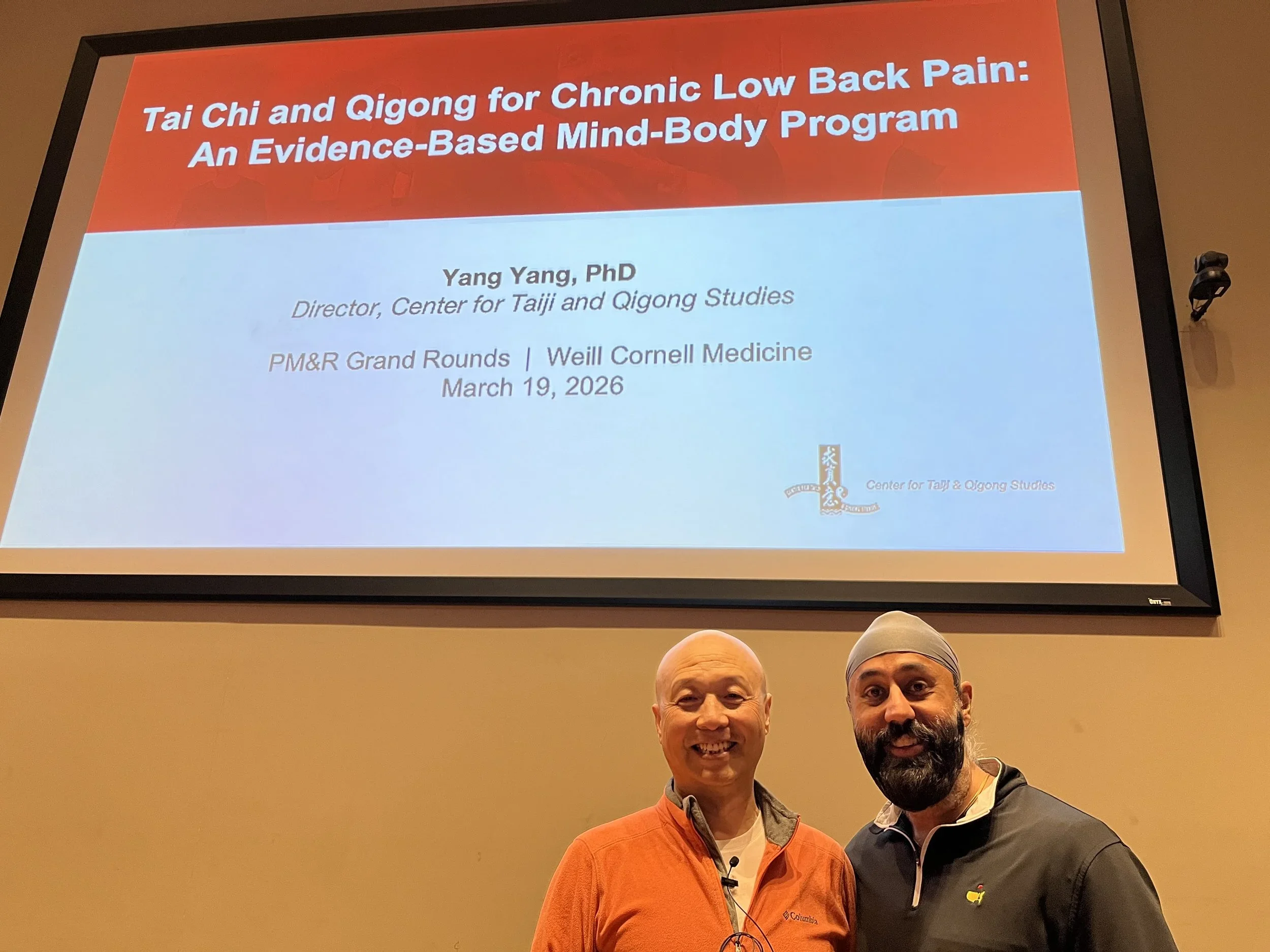
March 19, 2026
Master Yang with Jaspal Ricky Singh, MD
Grand Rounds Presentation
Department of Rehabilitation Medicine, Weill Cornell Medicine
Virtual Tai Chi and Qigong for Chronic Low Back Pain: Clinical Evidence, Mechanisms, and Next Steps
This Grand Rounds presentation reviews findings from a large pragmatic randomized controlled trial evaluating a virtually delivered Tai Chi and Qigong intervention for adults with chronic low back pain. The talk examines functional outcomes, rehabilitation-relevant mechanisms, and implications for long-term self-management.